Material analysis of ceramics and ceramic raw materials
Ceramics (fine and coarse ceramics as well as technical ceramics) have a wide range of applications in fields such as:
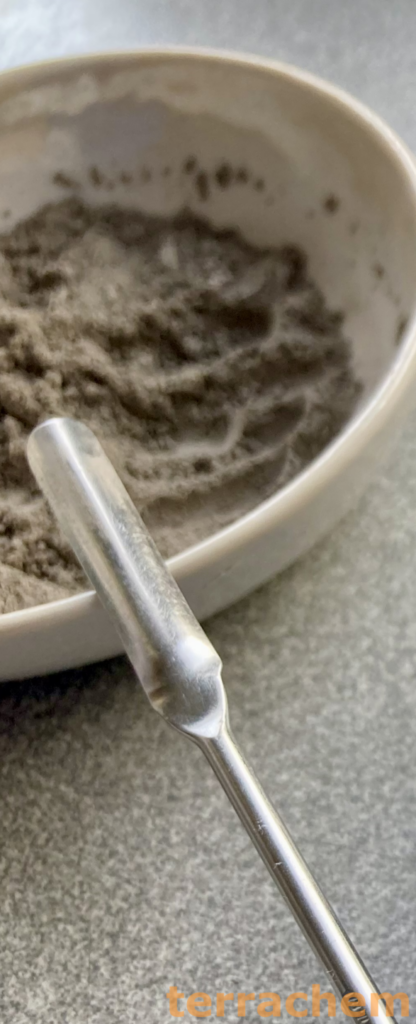
- Lorem ipsum
- Dolor sit amet
- Consectetur
- Adipiscing elit
- Medical technology
- Mechanical engineering
- Plant engineering
- Electrical engineering
- Aerospace
x
Since technical ceramics came into use in many fields, material analysis of ceramics has become an important part of quality management.
Every application requires specific properties, which in turn depend on the composition. Even small deviations can make a material unsuitable for the intended application. The raw materials used must also be tested for quality.
Analysis of ceramics at Terrachem:
- chemical analysis of ceramics and ceramic raw materials by X-ray fluorescence (XRF)
- reproducible and accurate results for major, minor and trace components
- different sample preparations for XRF
– we agree with you which elements you need
Back to overview
Standards and guidelines for ceramics:
DIN EN ISO 12677:2013-02 – Chemical analysis of refractory products by X-ray fluorescence (XRF) – Fused cast-bead method
DIN EN ISO 26845:2008-06 – Chemical analysis of refractories – General requirements for wet chemical analysis, atomic absorption spectrometry (AAS) and inductively coupled plasma atomic emission spectrometry (ICP-AES) methods
DIN 51001:2003-08 – Testing of oxidic raw materials and basic materials – General bases of work for X-ray fluorescence analysis (XRF)
DIN 51418-1:2008-08 – X-ray spectrometry – X-ray emission and X-ray fluorescence analysis (XRF) – Part 1: General terms and basic principles
DIN 51418-2:2015-03 – X-ray spectrometry – X-ray emission and X-ray fluorescence analysis (XRF) – Part 2: Definitions and basic principles for measurements, calibration and evaluation of results
Material analysis of refractory products
Refractory products and their raw and base materials include a wide variety of ceramics and materials with service temperatures above 600 °C.
Their compositions range from purely oxidic to complex mixtures containing silicon carbide (SiC), metallic silicon and graphite.
For the material analysis of refractory products, samples are generally prepared as fused beads. For more complex compositions containing so-called platinum poisons such as graphite, SiC or metallic silicon, the materials can only be fused after complete oxidation. Components such as silicon are then present only as silicon oxide (SiO<sub>2</sub>). The different bonding forms can no longer be distinguished, which requires further analytical techniques.
To distinguish between the proportions of SiC, SiO<sub>2</sub> and metallic silicon, Terrachem uses an analytical method that does without significant chemical changes. Combining thermogravimetry (TGA) and X-ray fluorescence (XRF) with a subsequent plausibility check, we can determine the proportions of SiC, SiO<sub>2</sub> and metallic silicon precisely.
Material analysis of refractory products at Terrachem:
- material analysis of refractory products and their raw materials by X-ray fluorescence (XRF)
- reproducible and accurate results for major, minor and trace components
- different sample preparations for XRF depending on the question
- we agree with you which elements you need
Back to overview
We work according to the following standards and guidelines for refractory products and their raw materials:
DIN EN ISO 12677:2013-02 – Chemical analysis of refractory products by X-ray fluorescence (XRF) – Fused cast-bead method
DIN EN ISO 26845:2008-06 – Chemical analysis of refractories – General requirements for wet chemical analysis, atomic absorption spectrometry (AAS) and inductively coupled plasma atomic emission spectrometry (ICP-AES) methods
DIN 51001:2003-08 – Testing of oxidic raw materials and basic materials – General bases of work for X-ray fluorescence analysis (XRF)
DIN 51418-1:2008-08 – X-ray spectrometry – X-ray emission and X-ray fluorescence analysis (XRF) – Part 1: General terms and basic principles
DIN 51418-2:2015-03 – X-ray spectrometry – X-ray emission and X-ray fluorescence analysis (XRF) – Part 2: Definitions and basic principles for measurements, calibration and evaluation of results